
Grass.
If you want great butter, feed cows grass. The milk and cream come out that much sweeter and richer. Pasture-raised cows produce superior milk. That also means that there are fewer of them, and, in turn that this kind of butter commands a higher price than the grain-fed herd cows.
What you save, though, by avoiding buying a lot of boxed foods every year, especially cake mixes and other butter-dependent foods, more than makes up for using a quality product over the cheaper one.
Butter gets a bit of a bad wrap from the healthier-than-thou, especially when hydrogenated vegetable oils are so bad that they are being phased out and banned. Butter has its uses. In limited quantities, it is a simple, natural wonder.
There are different grades of butter, and different kinds.
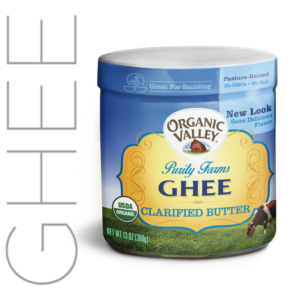 Ghee – A clarified butter that is cooked to a wonderful, slightly nutty flavor, that can be stored in its jar at room temperature. Good for everything that requires butter and a pan or griddle, from eggs to griddle breads, and even can be melted down as a drawn butter for prawns or lobster.Organic Valley’s Purity Farms is the best, with Trader Joe’s a close second, and there is more information about using Ghee on our product page (All of our product pages go in depth to teach you before we recommend that you buy/try something.).
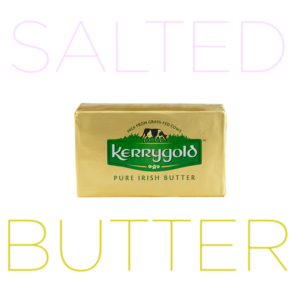 Salted Butter – Salted butter is most commonly used as a table butter, but it also is the go-to for any savory dish that needs butter unless a recipe specifically calls for unsalted or sweet cream butter. For applications like crisping up the skin of a poultry dish, the salt in the butter is less about the skin, which already has a nice amount of fat, and all about the salt helping the butter penetrate the cellular level of the meat with small layer of butter fats that give it a richer taste. It all depends on the brand you use to see how carried away that they get with the salt. I recommend the Kerrygold Salted Pure Irish Butter.
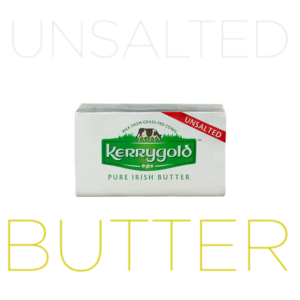 Unsalted Butter – If controlling the sodium levels is important in a dish, you go to unsalted. Many cake and bread recipes do better with unsalted because they’re trying to bring out the sweetness of the buttercream. So does something simple like fresh corn. Want perfection? Go Irish! Kerrygold Unsalted Pure Irish Butter, which I’ve been using for years, makes a big difference because of where it’s produced.
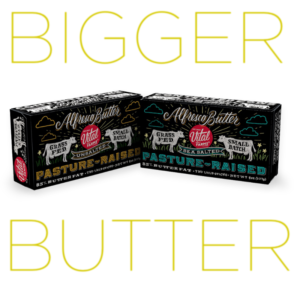 “European” or Pasture Butter – What are tagged as “European” butters seldom come from Europe these days, but it generally refers to butter with a higher fat content, usually 85% or thereabouts. I find that Vital Farms Alfresco pasture-raised butter, which throws off the Euro-pretense for “small batch” and “pasture raised” and “grass fed,” is the best of the high-fat butters. They’re good in limited quantities in baking, as a table butter, and as a topper for a good high-broil finish to a sous-vide steak, among other uses where a little dab of richness is called up. Truth in advertising: Vital Farms does let you know that some of their farmers, particularly during the cold months of the year, augment the cows’ diet with some grain, and that some of that grain is not GMO-free. Consuming milk or meat that is raised with some or all GMO grains has no basis as an issue in butter, but the PCer-than-thou crowd may bristle a bit.
Why are these “better” butters? Taste, and consistency. All butters are not created equal. Variations in not only fat content but the types of milk being produced can have a large effect.
EXOTIC BUTTERS
There are a few butters popping up in the buffalo, sheep and goat milk varietals. Sheep’s milk has a very particular flavor which may not be for everybody. Goat, likewise, has its fans and detractors.
- Fattorie Garofalo Burro di Bufala – This buffalo milk butter is rich, aromatic, and has a nutty-grassy palette. Works well with charcuterie, and it makes a nice topper to a steak broil with a sprinkle of Hawaiian pink salt.
- Meyenberg European Style Goat Milk Butter (California) – A high fat goat butter from one of the biggest goat milk dairies in the US, it has that classic goat milk tang that really pops as a topper on steamed green beans.
- Liberte Goat Milk Butter (Ontario) – Perhaps the most nuanced flavor palette of any goat butter I’ve tried, it’s strong but it riffs all kinds of nutty and tangy notes along the way.
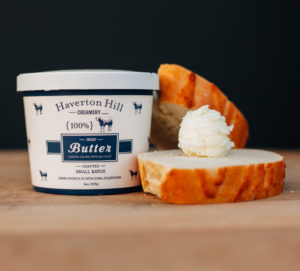 Haverton Hill Sheep Butter (California) – I don’t like many of the sheep butters that I’ve tried. They are usually strong and lack good distribution of their fats, which gives them an odd mouth feel to go with the odd taste, and a very weird melt point both on foods and in your mouth. Haverton Hill solves a number of my beefs about sheep butter. They make a European (high fat) butter that is small batch churned and has enough fat to stabilize the butter so it performs well. It’s still a bit more of an acquired taste in general applications, but I use it for the surface broil of my sous vide lamb chops, and it makes a nice spread on crackers topped with a bit of any good nutty cheese.
OTHER BETTER BUTTERS
Butters vary a lot by their fat to milk content. Typically cheaper production butters have more milk (water) to them. There are a lot of choices regionally on shelves, including a few that are priced to reflect their rarity. Ones that I’ve tried/tested that are good, but a notch or two down from my top picks:
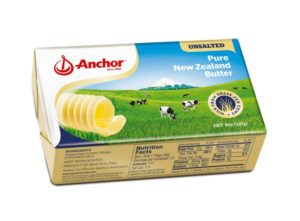 Anchor Butter (New Zealand) – This is one of the few grass-fed butters year round, so it’s pretty amazing stuff. I’ve never seen it in Florida, although it has surfaced in coastal cities like Los Angeles and New York, but if you’re in a part of the world where it appears on your shelf, move it to the top of the list.
- Lurpak (Denmark) – For more than a century this Danish butter has been produced without compromise. The price, at least in the United States, has been a bit too lofty;
- Evans Farmhouse Creamery Butter (New York) – Has that small batch richness and great mouth feel.
- Organic Valley (USA) – While we’re big fans of Organic Valley’s ghee, the butter just doesn’t have the same pop as either Kerry or Vital Farms’ products. Subjective, but I feel like there should be more taste to the cost here, but it’s definitely a quality product.
- Guffanti Burro (Italy) – A sideline of a great cheesemaker, this is a great, higher fat butter for baking.
- Straus Organic (California) – Another small batch butter. I don’t get access to it often in Florida, but it’s a high quality product.
- Delitia Parmigiano Reggiano “Il Burro” – From one of Italy’s best Parmigiano Reggiano cheesemakers, the same wonderful nutty taste in a butter. Great on a simple pasta with butter, salt, and a little pepper.
- Plugra (Texas) – A high-fat butter in the European tradition, the name is a variation of the French “plus gras,” or “more fat.” It’s a mass produced butter pretty commonly available across the US. I’ve used it, principally in baking. The milk it starts with isn’t any big wow, so I don’t get much “wow” out of the butter either. Many home bakers whom I know swear by it, so, in deference to them I’ll pop it on the list.