Product Description
PURPOSE
WHAT IS IT?
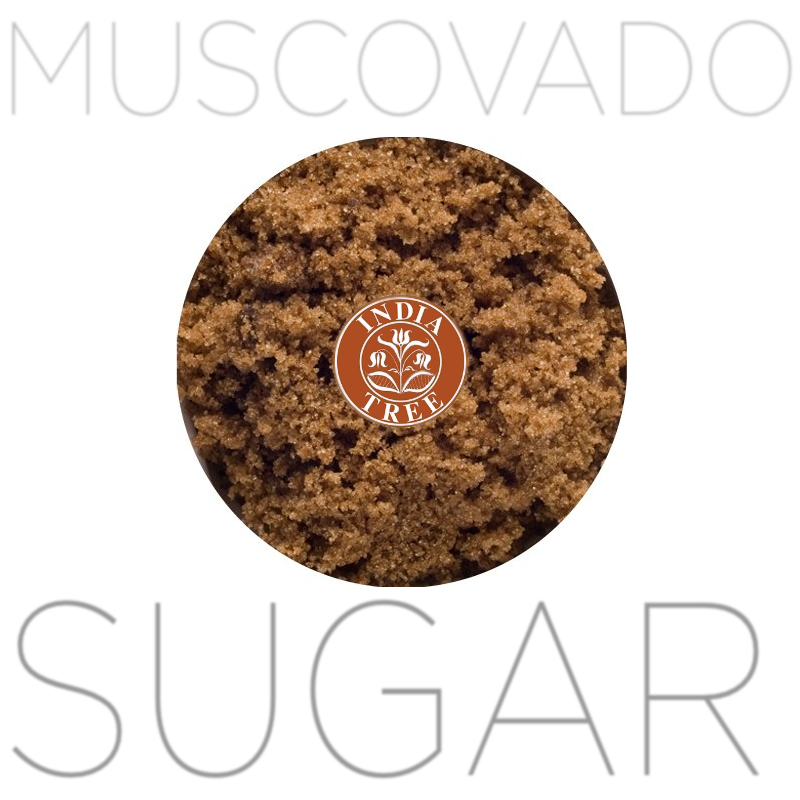
India Tree’s Muscovado Sugar is real deal brown sugar. American, “brown” sugar is just refined white sugar with molasses put in it. Muscovado is sugar, made in Mauritius, extracted from the juice of sugar cane using evaporation. When crystallization occurs the sugar is put into a centrifuge that separates a crystal-rich dark mush and drains off excess molasses.
It’s nutritionally richer and healthier than U.S. “brown” sugar or refined sugar. The minimal processing retains most of the natural minerals inherent in the sugarcane juice, so 100g would be provide mineral salts 740 mg max., phosphorus, calcium, magnesium, potassium, and iron.
Muscovado handles well at high temperatures and does not burn like brown sugar. That makes it great not only for baking, but for sweet sauces and fried sweet plantains. It’s also a good, more natural sugar for things like coffee.
It has a long shelf life. If it hardens, simply spray once with a little mist of distilled water, let it set, stir, and it will rehydrate enough to be pliable again.
This is the king of the brown sugars. Much richer than white-sugar brown, and better balanced than coconut sugar. India Tree delivers a ChoiceStuff Five Diamond product that will revolutionize your recipes which call for brown sugar!

EXPERIENCE
Primary sensory profile
- Sweetness type: Deep, weighted sweetness, not sharp or clean. It lands slowly and lingers.
- Molasses intensity: High. This is the defining trait, closer to treacle than standard brown sugar.
- Flavor notes:
- Dark caramel
- Burnt toffee
- Licorice edge
- Raisin, date, or fig undertones
- Slight mineral bitterness, almost like iron or wet earth
- Finish: Long, slightly sticky, with a faint bitterness that keeps it from becoming cloying
Texture and physical feel
- Moist, almost clay-like: It clumps easily, holds shape when pressed
- Fine but sticky crystals: Not dry or free-flowing like granulated sugar
- On the tongue: Dissolves slowly, leaving a coating effect rather than disappearing cleanly
Aromatic profile
- Heavy, humid aroma, almost “fermented sugarcane” adjacent
- Warm notes of molasses, rum, and dark baked goods
- Slight funk, which is natural to minimally processed cane sugar
CULINARY GEOGRAPHY
Philippines (especially Negros Island)
- One of the clearest modern identities for muscovado
- Often labeled simply “muscovado” in export markets
- Used in local sweets, syrups, and increasingly in craft baking and beverages
Indian subcontinent (India, Sri Lanka)
- Not always called muscovado locally, but closely related to gur/jaggery
- Wide use in everyday cooking, sweets, chutneys, and Ayurvedic preparations
- Flavor overlap, though textures can be more solid or block-like than loose muscovado
Caribbean (Barbados, Jamaica, Guyana)
- Historic heart of unrefined sugar production during the colonial era
- Muscovado was once the standard export sugar before industrial refinement
- Still appears in traditional desserts, rum production, and heritage recipes
Indian Ocean (Mauritius)
- Maintains artisanal sugar traditions alongside industrial production
- Muscovado used in specialty sugars marketed globally
TRADITIONAL USES
- Syrups
- Sweet-savory glazes
- Lentil dishes
- Savory marinades
IMPROVISATIONAL ‘RIFFS’
- Onion jam
- Butter baste amplifier
- Liquid and cocktail riffs, Muscovado simple syrup
- Espresso edge Tiny pinch in espresso or cold brew
THE BACKSTORY
- Sugarcane itself originates in South and Southeast Asia, especially India and New Guinea.
- Early sugar-making in India produced jaggery, a close cousin to muscovado, by boiling cane juice and letting it solidify with molasses intact.
- That method, minimal processing, high molasses retention, is the direct ancestor of muscovado.
why muscovado?
- It’s Real brown sugar, not highly processed white sugar with a little molasses tossed in;
- Richer flavor but lower glycemic index because it’s not overpurified
- Higher in the natural minerals of sugar cane stripped by purification;
- Handles well at high temperatures;
- Stores well.
AKA
Muscovado Sugar
Muscovado Sugar (English)
Azúcar muscovado (Spanish)
Sucre muscovado (French)
Muscovadozucker (German)
Zucchero muscovado (Italian)
Açúcar mascavo (Portuguese)
Muscovadosuiker (Dutch)
Muscovadosukker (Danish)
Muscovadosocker (Swedish)
Muscovadosukker (Norwegian)
Muscovadosokeri (Finnish)
Cukier muscovado (Polish)
Muscovado cukr (Czech)
Muscovado cukor (Slovak)
Muscovado cukor (Hungarian)
Muscovado sladkor (Slovenian)
Muscovado šećer (Croatian)
Muscovado šećer (Serbian Latin)
Мусковадо шећер (Serbian Cyrillic)
Zahăr muscovado (Romanian)
Мусковадо захар (Bulgarian)
Ζάχαρη muscovado (Greek)
Muscovado şekeri (Turkish)
Сахар мусковадо (Russian)
Цукор мусковадо (Ukrainian)
Цукар мусковадо (Belarusian)
მუსკოვადო შაქარი (Georgian)
Մուսկովադո շաքար (Armenian)
סוכר מוסקובדו (Hebrew)
سكر موسكوفادو (Arabic)
شکر موسکوادو (Persian)
मस्कोवाडो चीनी (Hindi)
مسکوواڈو چینی (Urdu)
মুসকোভাডো চিনি (Bengali)
ਮਸਕੋਵਾਡੋ ਚੀਨੀ (Punjabi)
மஸ்கோவாடோ சர்க்கரை (Tamil)
ముస్కోవాడో చక్కెర (Telugu)
ಮಸ್ಕೋವಾಡೋ ಸಕ್ಕರೆ (Kannada)
മസ്കോവാഡോ പഞ്ചസാര (Malayalam)
น้ำตาลมูสโควาโด (Thai)
Đường muscovado (Vietnamese)
Gula muscovado (Indonesian)
Gula muscovado (Malay)
Asukal na muscovado (Filipino/Tagalog)
莫斯科瓦多糖 (Chinese Simplified)
莫斯科瓦多糖 (Chinese Traditional)
黒砂糖(マスコバド)(Japanese)
머스코바도 설탕 (Korean)
Мусковадо сахар (Mongolian)
Sukari ya muscovado (Swahili)
Ushukela we-muscovado (Zulu)
Muscovadosuiker (Afrikaans)
ሙስኮቫዶ ስኳር (Amharic)
Sonkor muscovado (Somali)
Suga muscovado (Yoruba)
Suga muscovado (Igbo)
Sik muscovado (Haitian Creole)
Saccharum muscovado (Latin)
Get top quality from our friends at SpiceJungle..