The Jazz Chef

PURPOSE

WHAT IS IT?

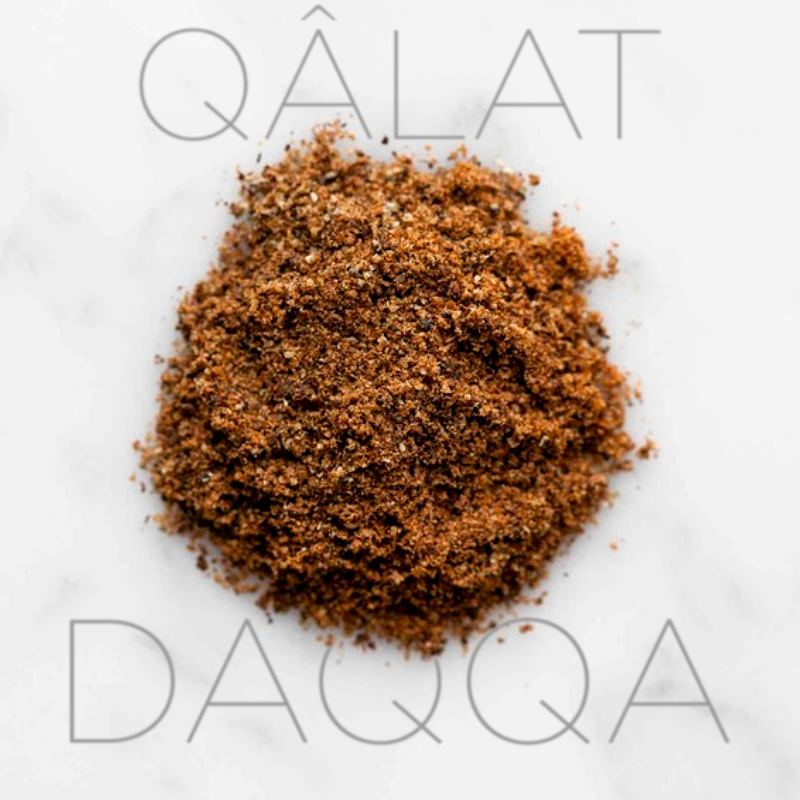
Asian five spice is a pretty common item at most American and European supermarkets these days, thanks to a ton of Chinese restaurants, and a few lead-dog television chefs who’ve introduced the flavor to Euramerican palettes, but Qâlat-Daqqa?

Qâlat-Daqqa, (Pronounced Kala-Daksa), more commonly known in English speaking countries, like Australia, that use it more, as Tunisian Five Spice, is still relatively new to the North American consumer, especially if they don’t shop at Arabic or African specialty markets.

It’s an aromatic and a flavorant of foods. The nutmeg, cinnamon and clove add aroma, the clove, pepper and grains of paradise contribute a little nutty spice and peppery pop.

World Spice makes a good one, custom grind too, but if you have most or all of these spices, consider grinding up your own as you can make just what you need, which keeps it both fresher and as one fewer thing taking up space in your spice aromata.

This is one of the few spice blends where different grinds can be used for different dishes. If you’re adding it to a rice dish, you’d want fine. For a roast chicken, you might go a med-fine grind, and, if you’re using it for tagine lamb, you might go with a coarser grind because it will cook for some time and soften, but still have a nice texture crusting the meat.

Grains of paradise and black pepper are from the same seasoning families and, in ancient versions of the recipe, were probably just grains of paradise, until pepper with a bit more kick came along. Grains of paradise, though, have much bigger flavor, which, for this mix, is key. In my variation, then, I hit the dish with a smoother, sweeter Saigon cinnamon, which is closer to Cassia, which is what the Tunisian recipes call for.  I dial up the grains of paradise a bit and the pepper down.

RECIPE

  1. If you’re going to use a cinnamon stick, be sure to break it into 2-3 smaller pieces before putting it into a spice mill, or cutting it up with a knife and coarse chopping it if you’re using a mortar/pestle. Skip this step with ground cinnamon.
  2. In a spice grinder of your choice (see above), place all the ingredients. Grind to the desired consistency for your application.
  3. Use in your recipe or store in an airtight container. Best to use within 6-8 months for maximum flavor, but it keeps, in dry storage, for a long time.

EXPERIENCE

This spice blend is great for many uses. I riff a Tunisian fried rice that rocks with it, and it’s great on all kinds of roasted meats, especially chicken, duck and lamb.

INGREDIENTS

USES

This spice blend is great for many uses. I riff a Tunisian fried rice that rocks with it, and it’s great on all kinds of roasted meats, especially chicken, duck and lamb.

CULINARY GEOGRAPHY

Qâlat-Daqqa—whose name means “castle of pounding”—is a hallmark spice blend of Tunisian cuisine, made from cloves, nutmeg, cinnamon, peppercorns, and grains of paradise. It imparts a sweet, warm, and slightly floral aroma that enriches both meat and vegetable dishes such as lamb tagines, roasted eggplant, pumpkin stews, and even fruit-based desserts  . While its roots lie deeply in Tunisia’s northern and central regions—reflecting centuries of Mediterranean, Saharan, and Arab‑Andalusian trade—it has also found new appreciation abroad, gaining traction in markets like Australia, Europe, and North America  .

MISE-EN-PLACE

  • Spice Grinder or Coffee Mill or mortar/pestle.
  • Work bowl or cup
  • Rosti Mepal Modula spice box or other airtight container.
  • Sharp knife/cutting board (Cinnamon stick only)

IMPROVISATIONAL ‘RIFFS’

THE BACKSTORY

Qâlat-Daqqa, meaning “castle of pounding” in Arabic, is a traditional Tunisian spice blend made from cinnamon, cloves, nutmeg, grains of paradise or pepper, and dried rosebuds or allspice. It reflects Tunisia’s role as a trade crossroads, with spices arriving via Indian Ocean, Ottoman, and Saharan routes, while floral notes came through Arab-Andalusian influence. Used in lamb, couscous, stews, and even sweets, it stands apart from Moroccan ras el hanout or Egyptian dukkah as Tunisia’s signature warm, sweet, and floral five-spice blend.

AKA


  • English: Qâlat-Daqqa (Tunisian Five Spice)
  • French: Qâlat-Daqqa (Épices tunisiennes cinq)
  • German: Qâlat-Daqqa (Tunesisches Fünf-Gewürz)
  • Spanish: Qâlat-Daqqa (Cinco especias tunecinas)
  • Italian: Qâlat-Daqqa (Cinque spezie tunisine)
  • Portuguese: Qâlat-Daqqa (Cinco especiarias tunisinas)
  • Dutch: Qâlat-Daqqa (Tunesische vijfkruidenmix)
  • Russian: Калат-Дака (Тунисская смесь пяти специй)
  • Greek: Κάλατ-Ντάκα (Τυνησιακό μείγμα πέντε μπαχαρικών)
  • Arabic: قلات دقة (بهارات تونسية خمسة)
  • Hebrew: קאלת-דאקה (תערובת חמישה תבלינים תוניסאית)
  • Turkish: Kalat-Dakka (Tunus beş baharatı)
  • Persian (Farsi): قلات دقه (پنج ادویه تونسی)
  • Swahili: Qâlat-Daqqa (Viungo vitano vya Tunisia)
  • Hausa: Qâlat-Daqqa (Hadin kayan yaji na Tunisia guda biyar)
  • Amharic: ቃላት-ዳቅአ (የቱኒዚያ አምስት ቅመማት)
  • Zulu: Qâlat-Daqqa (Izinongo ezinhlanu zaseTunisia)
  • Hindi: क़ालत-दक्का (ट्यूनीशियाई पाँच मसाले)
  • Bengali: কালাত-দাক্কা (তিউনিসিয়ান পাঁচ মশলা)
  • Urdu: قلات دقہ (تیونسی پانچ مصالحہ)
  • Tamil: காலத்-தக்கா (துனிசிய ஐந்து மசாலா)
  • Telugu: కాలత్-దక్కా (ట్యునీషియన్ ఐదు మసాలాలు)
  • Chinese (Simplified): 卡拉特-达卡 (突尼斯五香料)
  • Chinese (Traditional): 卡拉特-達卡 (突尼西亞五香料)
  • Japanese: カラット・ダッカ(チュニジアの五香スパイス)
  • Korean: 칼랏-다까 (튀니지 오향 조미료)
  • Thai: คาลาต-ดักกา (เครื่องเทศห้าอย่างแบบตูนิเซีย)
  • Vietnamese: Qâlat-Daqqa (Ngũ vị hương Tunisia)
  • Malay / Indonesian: Qâlat-Daqqa (Rempah lima Tunisia)
  • Polish: Qâlat-Daqqa (Tunezyjska mieszanka pięciu przypraw)
  • Czech: Qâlat-Daqqa (Tuniské pěti koření)
  • Hungarian: Qâlat-Daqqa (Tunéziai öt fűszer keverék)
  • Finnish: Qâlat-Daqqa (Tunisialainen viiden mausteen sekoitus)
  • Swedish: Qâlat-Daqqa (Tunisisk femkrydda)
  • Norwegian: Qâlat-Daqqa (Tunisiske femkrydderblanding)
  • Danish: Qâlat-Daqqa (Tunesisk femkrydderiblanding)
Where to Find It
SpiceJungle.com

Get top quality from our friends at SpiceJungle..

Post Views: 11,310